
The Open Internet has Spent Too Long Selling Quantity Over Quality
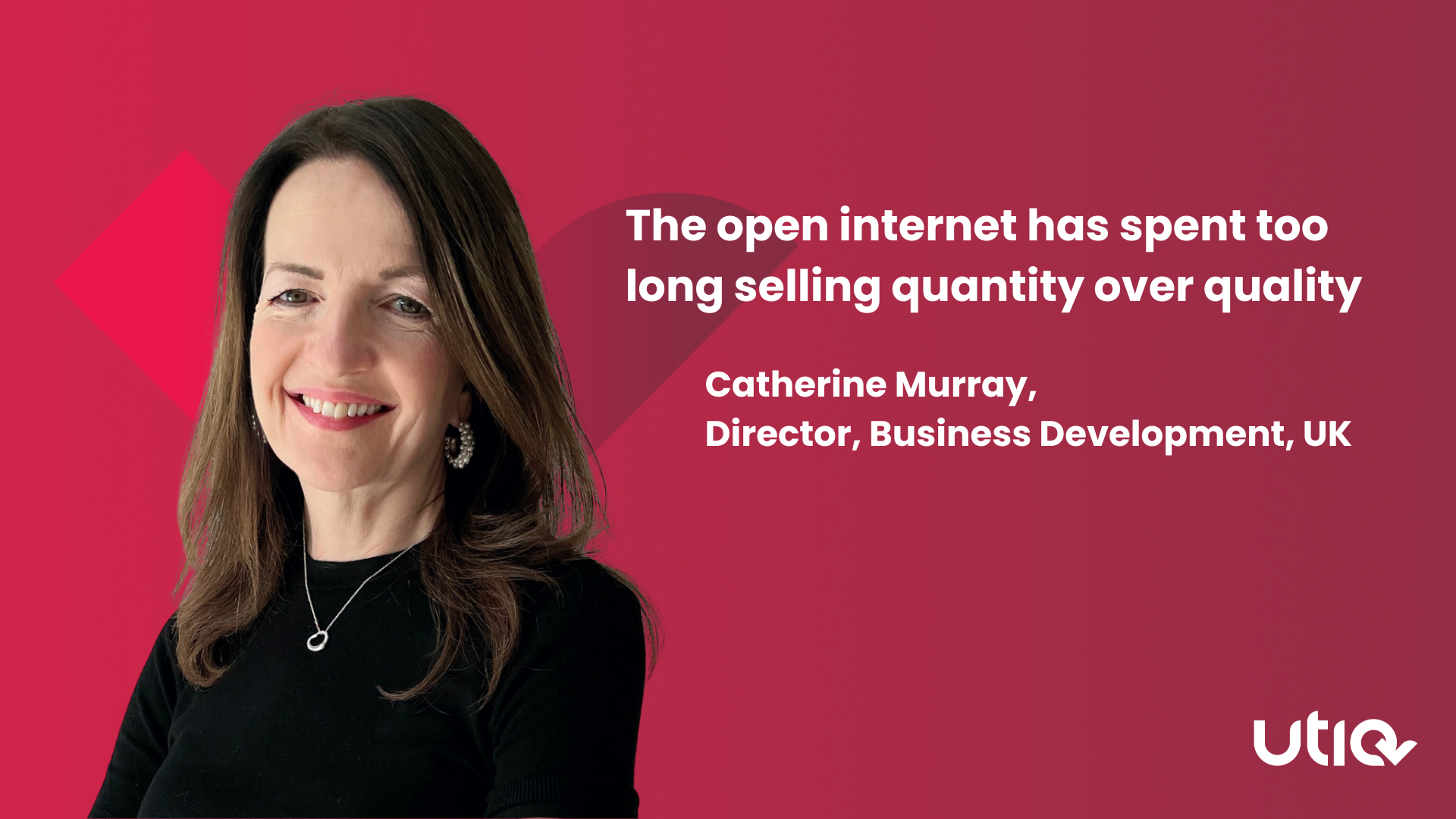
By Catherine Murray, Director, Business Development, UK at Utiq
Something unusual happened in the UK publisher market this summer. Ozone reported that ad request volumes across its premium publisher cohort were down by 39% to 41% year on year during the second quarter, largely as search sent fewer people through to publisher sites. At the same time, average eCPMs in June were about 30% higher than a year earlier.
Losing traffic on that scale hurts. Publishers cannot simply celebrate a higher price for what remains, when there are materially fewer opportunities to sell. Still, the figures expose a question that has sat underneath programmatic advertising for years: why has the open internet been so willing to compete on abundance?
We made volume look like value
Programmatic buying removed much of the friction from accessing media, which was a genuine advance. It also trained buyers to expect extraordinary amounts of supply, often with price as the easiest point of comparison between one opportunity and another.
Publishers producing journalism, entertainment or specialist content have lived with the consequences of that for a long time. Their inventory enters a market where vastly different kinds of sites can appear side by side, even though the reason a person arrived, the relationship they have with the publisher and the quality of the experience bear little resemblance to one another.
Plenty of advertisers know this already, but buying behaviour has been slower to change. The latest ANA transparency work makes the cost of that habit hard to ignore. During Q1 2026, higher-performing advertisers converted 54% of programmatic spend into qualified impressions, against 32.1% among the lower-performing group. Transaction costs explained relatively little of the gap; media quality losses accounted for far more. Cheap reach can become expensive surprisingly quickly.
Fewer impressions change the conversation
AI search has made the publisher traffic problem much more immediate. Answers that once required a visit to a website are increasingly being supplied before the user leaves the search experience, so fewer journeys continue through to the original source.
No publisher asked for that change and replacing lost referral traffic will be difficult. There is another shift happening alongside those numbers. Some publishers are deliberately reducing low-value bid requests and cutting ad load rather than trying to preserve every possible advertising opportunity.
I find that more interesting than another debate about how many impressions the open web can manufacture. A smaller pool of inventory puts pressure on buyers to care more about what sits behind each opportunity. The publisher’s relationship with its audience becomes harder to dismiss as a soft measure of quality when the alternative is buying large amounts of supply with much less certainty about the person or the setting.
And this is where conversations with publishers are changing. There is more interest in preserving the value of direct audience relationships and making them usable for advertising without surrendering control of them to a closed platform.
Premium needs evidence behind it
The word ‘premium’ has been stretched fairly thin in advertising. A logo, recognisable editorial brand or curated marketplace may help signal quality, but buyers quite reasonably want something they can test. Audience information is part of that proof.
Utiq uses telco-powered infrastructure to create a dependable connection with people who have given their consent. Those signals support addressability and measurement across premium open-internet environments, while the individual retains direct control over their choice.
For publishers, the benefit reaches beyond finding an audience. A people-based signal can give an advertiser a clearer view of exposure across browsers and make later measurement less dependent on assumptions. That gives the publisher something firmer to take into a commercial conversation about the worth of its media. Price still matters. It simply makes more sense when the buyer understands what the price buys.
The publisher created the reason to be there
One part of programmatic trading has always struck me as slightly backwards. By the time an impression reaches an auction, the publisher’s most important contribution can look almost incidental. Someone chose to visit because there was something worth reading or watching. The publisher invested in making it and built the relationship that brought the person there. Only then did an advertising opportunity exist.
Automated trading turns that moment into a set of technical signals very efficiently, but efficiency can flatten the differences between media if buyers allow it to. Publishers have spent years arguing that context and audience relationship carry commercial value, while the machinery around them has often rewarded scale instead. Current traffic pressure makes that contradiction harder to sustain.
Advertisers are also becoming more selective. The ANA reported that private marketplaces accounted for more than 92% of median programmatic spend in Q4 2025, alongside a marked contraction in the breadth of supply being bought. The direction of travel is towards fewer, better-understood places to spend money.
Scarcity could reset the price of quality
None of this makes declining publisher traffic good news. The open internet needs commercially healthy publishers, and a sharp reduction in visits threatens the funding behind content people still expect to find freely available.
Yet trying to repair the problem by recreating lost volume would take us back towards the same economics that weakened publisher value in the first place. A better response is to make the remaining opportunity easier to judge. Buyers should know more about the audience behind an impression, and publishers should have the means to demonstrate that value without handing their audience relationship elsewhere.
If AI continues to reduce the flow of casual search traffic, the open internet may become a scarcer advertising environment almost by accident. Publishers now have a chance to decide whether scarcity simply means less inventory, or whether it finally changes what that inventory is allowed to be worth.