
Identity has Outgrown the Media Plan
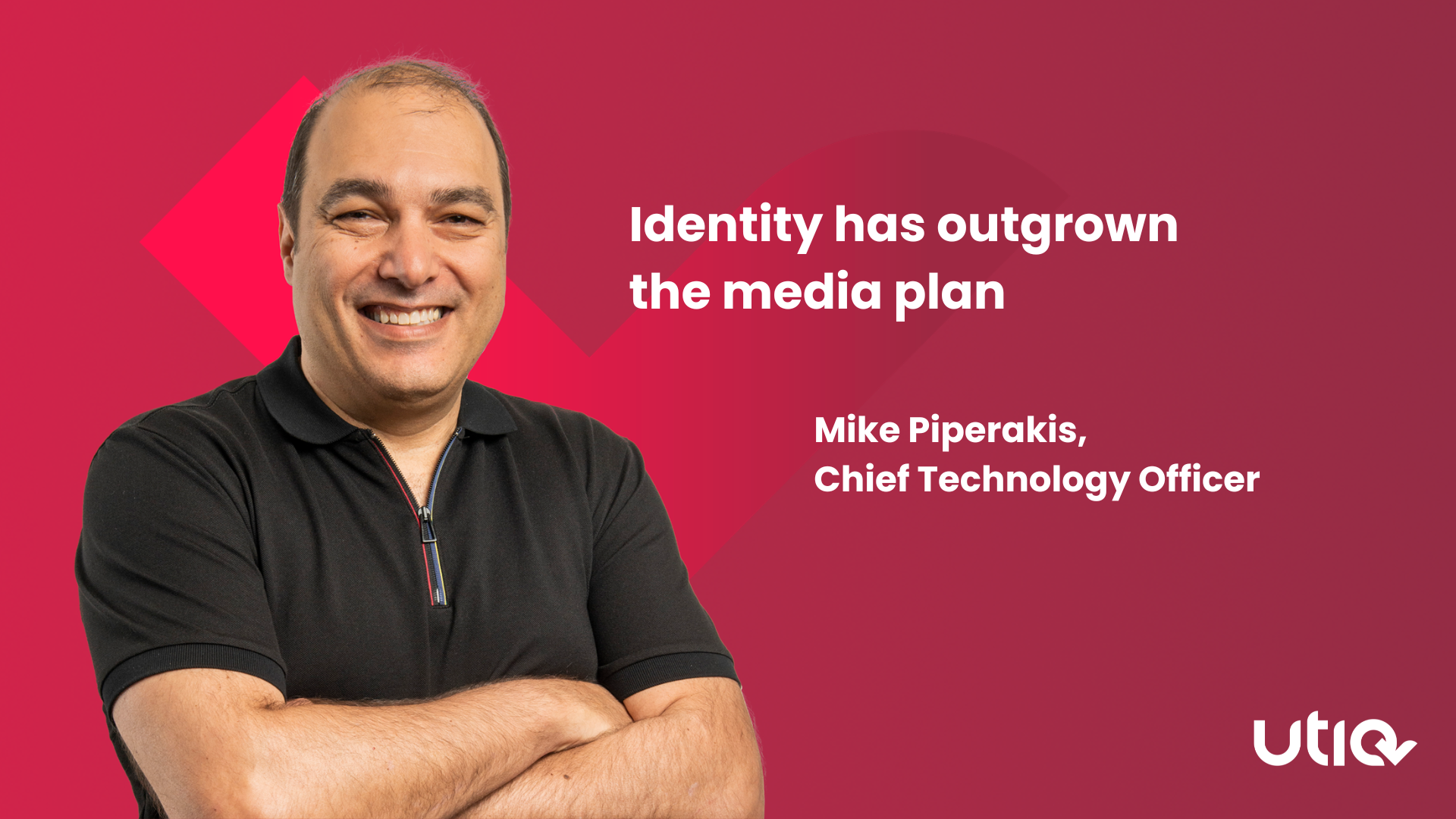
By Mike Piperakis, Chief Technology Officer at Utiq
Identity used to have a fairly contained role in digital advertising. Buyers wanted to know whether they could recognise an audience, reach enough of it to make a campaign viable and continue doing so as familiar browser identifiers disappeared. That framing was useful for a while. But it is becoming too narrow.
The same signal can now affect how exposure is managed across browsers, whether campaign activity can be connected to an outcome later, and whether the choice made by the person behind that signal still holds when it is used elsewhere. Identity is carrying more weight through the advertising process than the language around it often admits.
For me, that changes how we should judge the technology.
Match rate tells only part of the story
Match rate became popular because it gives buyers something immediate to compare. It answers a commercial question quickly and has the reassuring certainty of a percentage attached to it. What it does not show is how much confidence should sit behind the match.
A signal may recognise a large audience while revealing very little about how that audience was formed. The limitation becomes more obvious later, perhaps when frequency has to be managed across different browsers, or when a campaign team wants to connect exposure with a measured outcome. By then, the identity choice has already been made.
This is where architecture becomes important. A solution can look effective at the first point of use and become less dependable as more tasks are placed on top of it. The original signal has to withstand that extra pressure.
The beginning of the signal shapes what follows
At Utiq, we provide a Telco-powered infrastructure with user-consented signals, to enable better marketing performance and ROI in the premium open internet. As CTO, I care a great deal about provenance because it determines what can reasonably be built on top of an identity signal.
Frequency control exposes the problem and potential quite quickly. When two browser instances are interpreted as two separate people, a campaign may continue buying impressions without realising it is returning to the same person. What looks like a small identity weakness becomes wasted media.
Measurement creates a different strain. The advertiser has to trust that the audience being measured bears a reliable relationship to the audience that was activated. If those two stages rest on different assumptions, confidence starts to erode.
Closed environments can make identity look easier than it is
Inside a closed platform, many of these problems are less visible because recognition, activation and reporting take place within the same boundaries. The experience can appear complete from the buyer’s side. Once activity moves across the premium open internet, those boundaries become much harder to ignore.
People move between publishers and browsers. Publishers have direct relationships with their audiences that should not disappear simply because a campaign uses external technology. Advertisers still want a coherent view of exposure without being forced into one closed system.
That is why interoperability matters, although I do not think the answer is one identifier used everywhere. Different methods will continue to coexist. The more useful question is whether systems can understand what a signal represents without stripping away the permissions attached to it. If they cannot, every new connection introduces another opportunity for meaning to be diluted. Technical fragmentation then reappears later as media inefficiency.
Automation will expose weak foundations faster
As more buying decisions are handed to automated systems, there will be fewer moments where somebody pauses to question an ambiguous input. Machines will act on the identity signals they receive. They do not recover certainty that was missing at source, and greater processing speed cannot compensate for an unclear connection between a signal and the person behind it. This places more pressure on the work underneath AI-enabled media buying.
There is understandable excitement around what automated planning and activation may achieve. The less visible work is making sure those systems are given signals whose origin can still be explained and whose permissions remain clear. That part may be less fashionable. It is also where a large amount of confidence in automated advertising will be earned.
Buyers should ask what the identity can carry
Reach still matters. An identity solution has to recognise enough of an audience to be useful, otherwise the rest becomes academic.The evaluation should continue beyond that first number.
What happens when the same signal is expected to support measurement later? Does it remain understandable when it moves between technical environments? These are harder questions, and they reveal much more about whether the technology has been built for one campaign task or for a broader role.
For much of the last decade, third-party cookie deprecation kept identity framed as a replacement exercise. The market needed alternatives, so most of the debate focused on what could fill the gap. That phase has shaped how identity is still bought today, but the job has already moved on.
Identity now sits beneath more of the advertising process, carrying user choice into systems that are becoming increasingly automated and connecting activity that once lived in separate parts of the media stack. The media plan is still where many people first encounter identity. It should no longer be where they stop thinking about it.